Workplace wellbeing programs have become increasingly common as organisations recognise the connection between employees’ health, productivity, and workplace culture. Many companies genuinely want to support their staff in being healthier and feeling better at work.
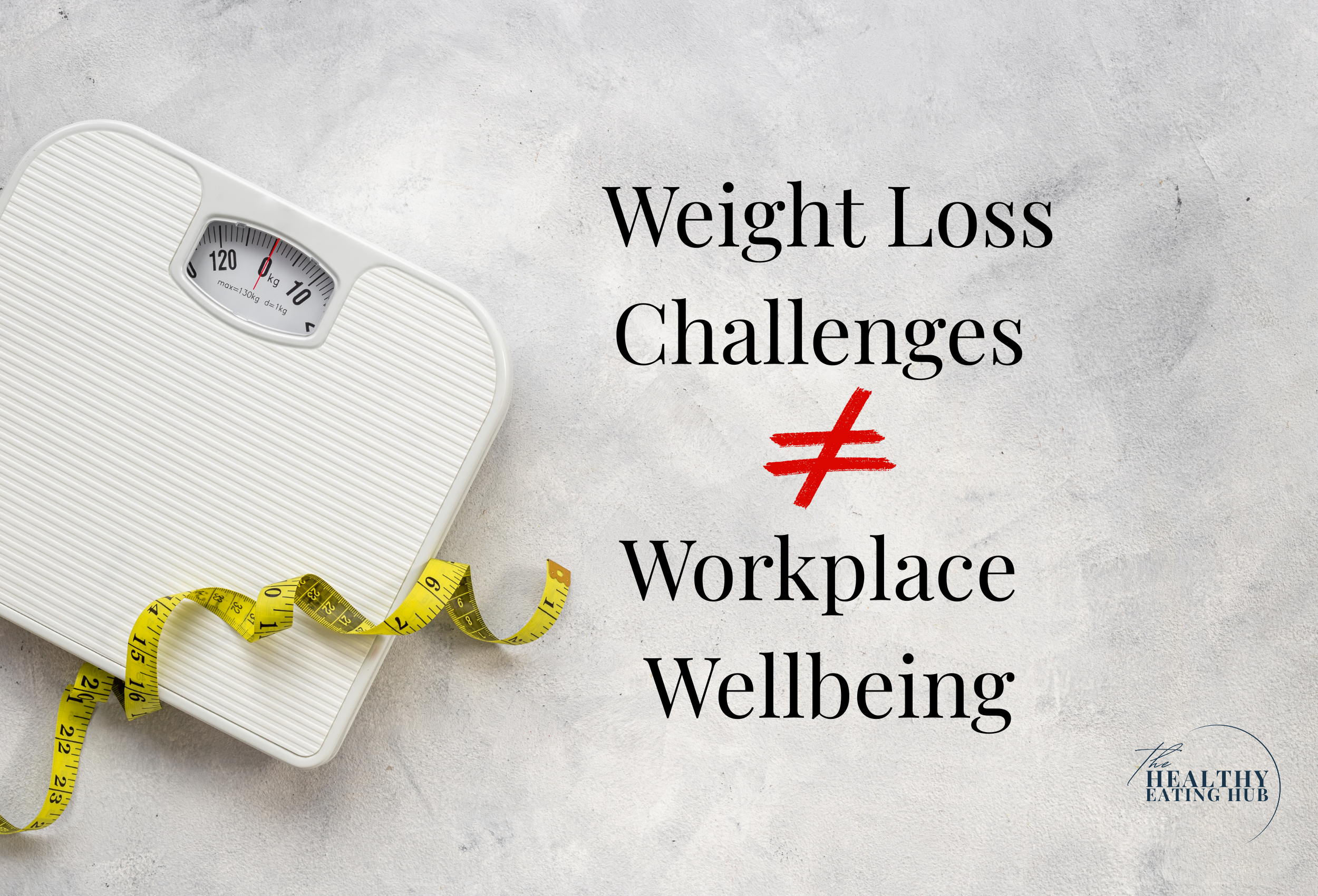
One initiative that often appears in workplace wellbeing programs is a weight loss challenge. These programs typically encourage employees to lose weight over a set period of time, often using incentives, competitions, or public weigh-ins. While these challenges may be well-intentioned, evidence suggests that weight-focused programs can actually do more harm than good. If organisations want to support employee wellbeing, there are better and more inclusive approaches.
Weight Is Not a Reliable Measure of Health
One of the biggest problems with workplace weight loss challenges is that body weight is used as a proxy for health. It is assumed that if people get smaller, regardless of how they do it, they must be healthier. This couldn’t be further from the truth.
The truth is, health is influenced by a wide range of factors, including diet quality, physical activity, sleep, stress, genetics, and social determinants of health. Body weight alone does not capture these complexities.
Research consistently shows that improvements in health behaviours such as eating more nutrient-dense foods, being consistently physically active, and reducing sedentary time can improve health markers like blood pressure, blood glucose, and cardiovascular fitness, even when body weight does not change significantly.
By focusing primarily on weight, organisations risk missing the behaviours that actually improve health. They also encourage losing weight at all costs, which does the very opposite of promoting health, it impairs it.
Weight-Focused Programs Can Be Stigmatising
Another concern is that workplace weight loss challenges can unintentionally create environments where employees feel judged or singled out based on their body size. Public weigh-ins, team competitions based on weight loss, and leaderboards can reinforce body comparison and social pressure. For employees in larger bodies or those with complex health histories, this can be uncomfortable or even distressing.
You might have employees with complex relationships with food and their bodies, or they’re recovering from an eating disorder, or right in the thick of it. Weight-based health activities are known to exacerbate eating disorders, trigger them or cause relapse.
Weight stigma is associated with negative outcomes, including higher stress, lower self-esteem, and avoidance of health care or workplace activities. Importantly, research suggests that weight stigma can actually undermine health behaviours rather than support them.
Workplace wellbeing programs should aim to create inclusive environments where all employees feel respected and supported, regardless of body size.
Weight Loss Challenges Encourage Short-Term Behaviour
Most weight loss challenges run for a limited period, often four to eight weeks. While this timeframe may seem motivating, it tends to encourage short-term behaviour change rather than sustainable habits. Employees may adopt restrictive diets or intense exercise routines to achieve rapid weight loss during the challenge period. These approaches are rarely sustainable and often lead to weight regain once the program ends. From a health perspective, this pattern of repeated weight loss and regain, called weight cycling, has been linked with negative metabolic and psychological outcomes.
If the goal of workplace wellbeing is to improve long-term health, programs should focus on building sustainable habits rather than short-term outcomes.
They Can Blur Personal Boundaries
Another challenge with weight-focused workplace programs is that they bring a very personal piece of information into the workplace environment. Body weight is influenced by a range of factors including medical conditions, medications, life circumstances, and genetics. When workplaces centre wellbeing programs around weight, employees may feel pressure to disclose or discuss personal health information that they would otherwise keep private.
Good workplace wellbeing programs should respect individual autonomy and personal boundaries. Supporting healthy choices is appropriate; evaluating or comparing employees’ bodies is not.
They Miss the Opportunity to Improve the Workplace Environment
Perhaps the most significant limitation of weight loss challenges is that they place almost all responsibility on individuals rather than addressing the environment that shapes health behaviours.
Research in public health consistently shows that environments play a powerful role in influencing behaviour. Access to healthy food, time for meal breaks, supportive leadership, and workplace culture all affect how easy it is for people to look after their health.
Instead of asking employees to change their bodies, organisations can have a much greater impact by improving the conditions that support health.
Examples include:
- Ensuring nutritious food options are available in workplace catering and canteens
- Providing practical nutrition education and cooking skills
- Supporting reasonable work hours and regular meal breaks
- Creating workplace cultures that value wellbeing rather than productivity at all costs
These types of initiatives support everyone in the workplace, not just those who choose to participate in a challenge. View our services and how they can help.
A Better Approach to Workplace Wellbeing
The most effective workplace wellbeing programs focus on health behaviours, supportive environments, and inclusive culture, rather than your employees’ body weight. Instead of weight loss challenges, organisations can consider initiatives that promote sustainable habits, such as:
- Nutrition education workshops that focus on practical strategies for eating when life is busy or when you’re on the go
- Healthy catering and canteen improvements, like recipe and menu development by qualified nutritionists
- Practical strategies for meal planning and food preparation so employees can bring their own food to work
- Movement opportunities during the workday
- Programs that support sleep, stress management, and work-life balance
These approaches encourage employees to build habits that improve their health without creating pressure or competition around body size.
Supporting Health Without Focusing on Weight
Workplaces have an important opportunity to influence health at scale. When organisations invest in thoughtful wellbeing strategies, they can help employees feel more energised, focused, and supported, while also improving productivity, boosting morale, and reducing unplanned absenteeism.
Effective wellbeing programs also recognise that health is complex and deeply personal. Initiatives that focus on behaviours, environments, and culture are far more likely to create meaningful and lasting change than those that focus on weight.
The future of workplace wellbeing is not about shrinking bodies. It is about creating environments where healthy choices are easier, and everyone has the opportunity to thrive.
