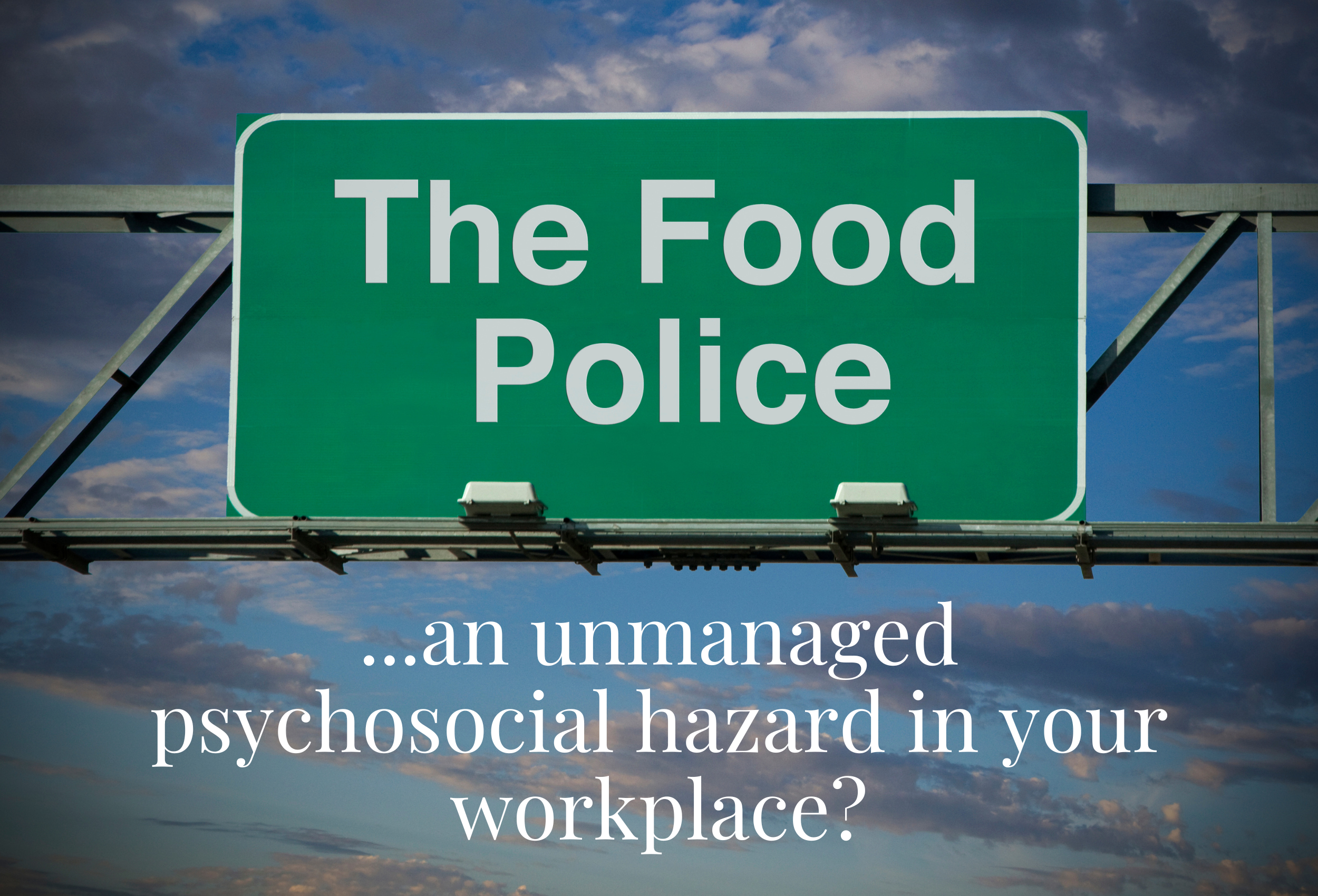
Have you come across the food police before? And no, I’m not talking about dietitians! While dietitians do comment on people’s food choices (a hallmark of the food police, as I’ll get into below), these comments come from a non-judgmental place. A dietitian’s comments are not about making one feel bad about oneself, or placing impossible expectations for change on others. Rather, dietitians ask questions to assess the quality of someone’s diet (read: food intake, not a ”going-on-a-diet” diet) and use this information to help make tweaks to optimise their health.
So if I’m not talking about dietitians…
Who are the food police?
The food police is the name we give those who comment on others’ food choices, often without being asked to. These comments can be overtly or covertly related to the size and/or shape of the person they are commenting on. The food police are generally well-meaning, often having the best interests of their family, friends, and colleagues at heart. They are a product of diet culture – the widespread set of beliefs that equate thinness with health and self-worth, resulting in the notion that one is morally superior if their body size/shape fits within a certain ideal – and, as such, can make harmful comments without knowing the damage they can do.
What’s the damage?
The comments coming from the food police can affect different people in different ways. The comments may be overtly hurtful, and in many circumstances can count as workplace bullying.
Even when the comments are not intended to be harmful, they can create stress and anxiety around food and eating and can impact on mental health.
The food police are not only a product of diet culture, but also (often accidentally) part of what perpetuates diet culture and contributes to its pervasiveness, including in the workplace. The damage here is that diet culture’s ability to create feelings of guilt and shame around food choices and erode our ability to trust our own bodies leads to lower self-esteem and self-worth. Further to this, for susceptible people, diet culture leads to the development of eating disorders, which are serious and potentially life-threatening mental health issues. Bottom line for employers?
Their impact on workplace culture can make the workplace a less mentally safe space.
What might the workplace food police sound like?
Food police comments can be many and varied. Some might even seem innocuous on the surface. They are often heard in the lunchroom and at work morning teas etc.
Examples include:
- I don’t know how you can eat all of that!
- Is that all you’re going to eat?
- Are you sure you want to eat that/that much?
- Oh, that’s what/how much you’re having!
- You’re having another one?!
- I thought you were on a diet…
- Aren’t you worried about all the carbs/toxins/fats/preservatives/additives/calories/[insert other demonised ingredient here]?
- I don’t eat [insert fad food or nutrient to avoid].
- That’s so great that you’re only eating a salad for lunch!
- The response of “that’s ok, you could stand to a miss a meal anyway” to someone saying they are hungry.
- I don’t eat that, it gives you diabetes/[insert other unfounded food-disease connection here].
- It’s so great that you can eat anything you want and it doesn’t matter! I certainly can’t do that or I’d get fat!
The list really does go on, but I’ll leave it there!
So, what can you do?
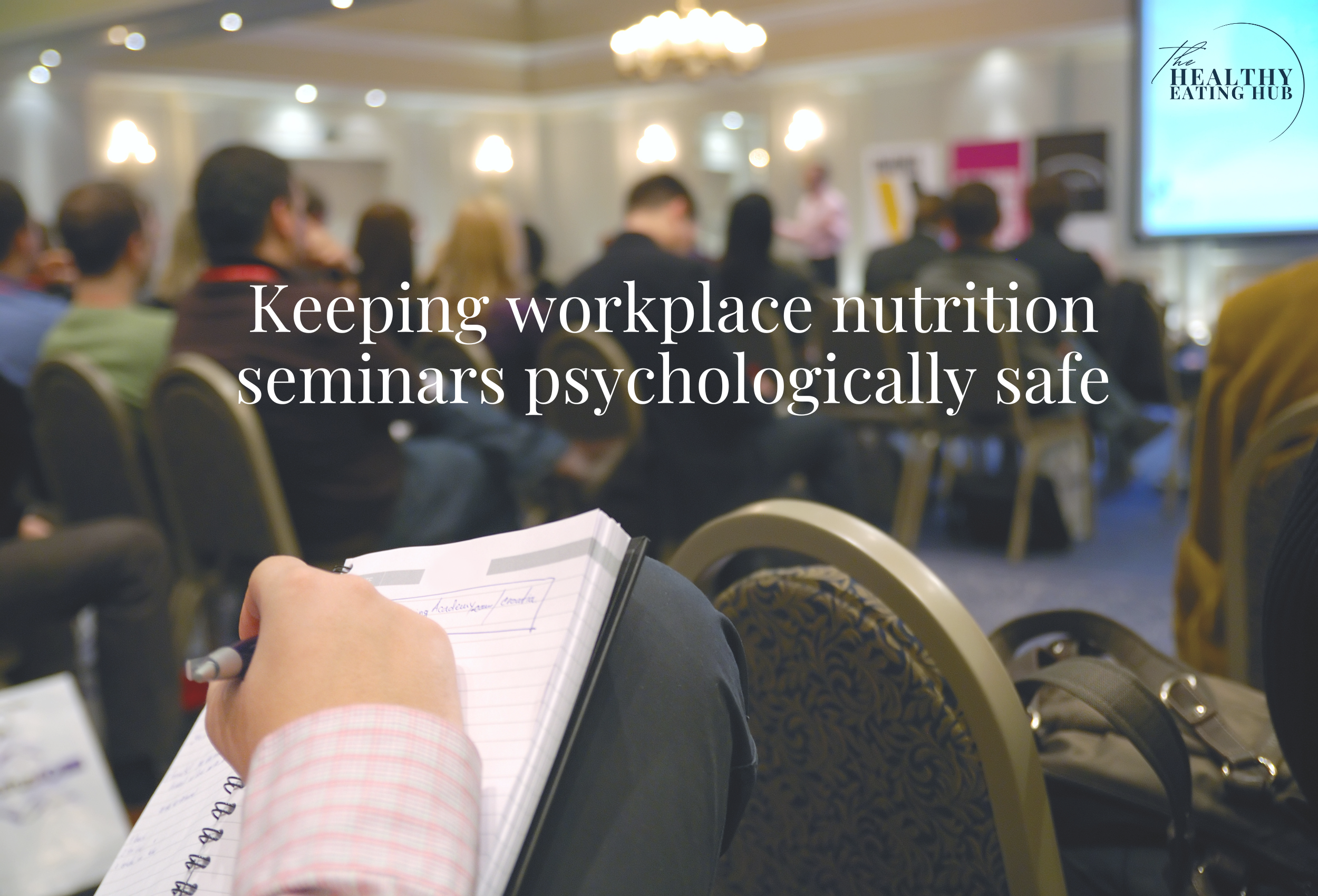
From a workplace safety perspective, it is important to identify psychosocial hazards and minimise them where possible. Discouraging “diet talk” of any sort is a great first step. You could also run seminars/workshops on the topic.
Decreasing the food police in your workplace is unlikely to happen overnight. It will involve a shift in workplace culture, and this takes time and effort from all parties.
As with all changes encouraged by dietitians, raising one’s awareness of what’s going on is the first step to making any changes. If you’re not sure where to start, our Workplace Wellbeing Method can help. If you feel you have a good grasp of what the issues are but need assistance in changing things up, perhaps a bespoke seminar or workshop is the way to go. If you feel an individualised approach to both decreasing the presence of food police comments in your workplace and helping those affected by them is required, our Employee Nutrition Program is just what you need.
Contact us to talk through the options for decreasing this psychosocial hazard in your workplace.