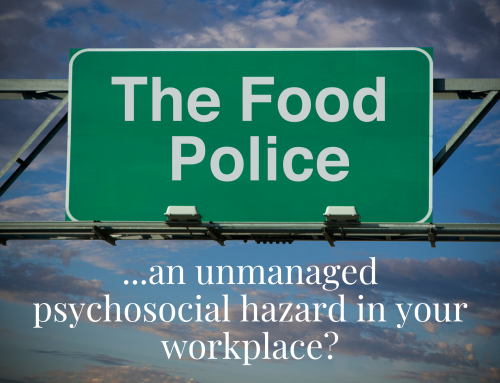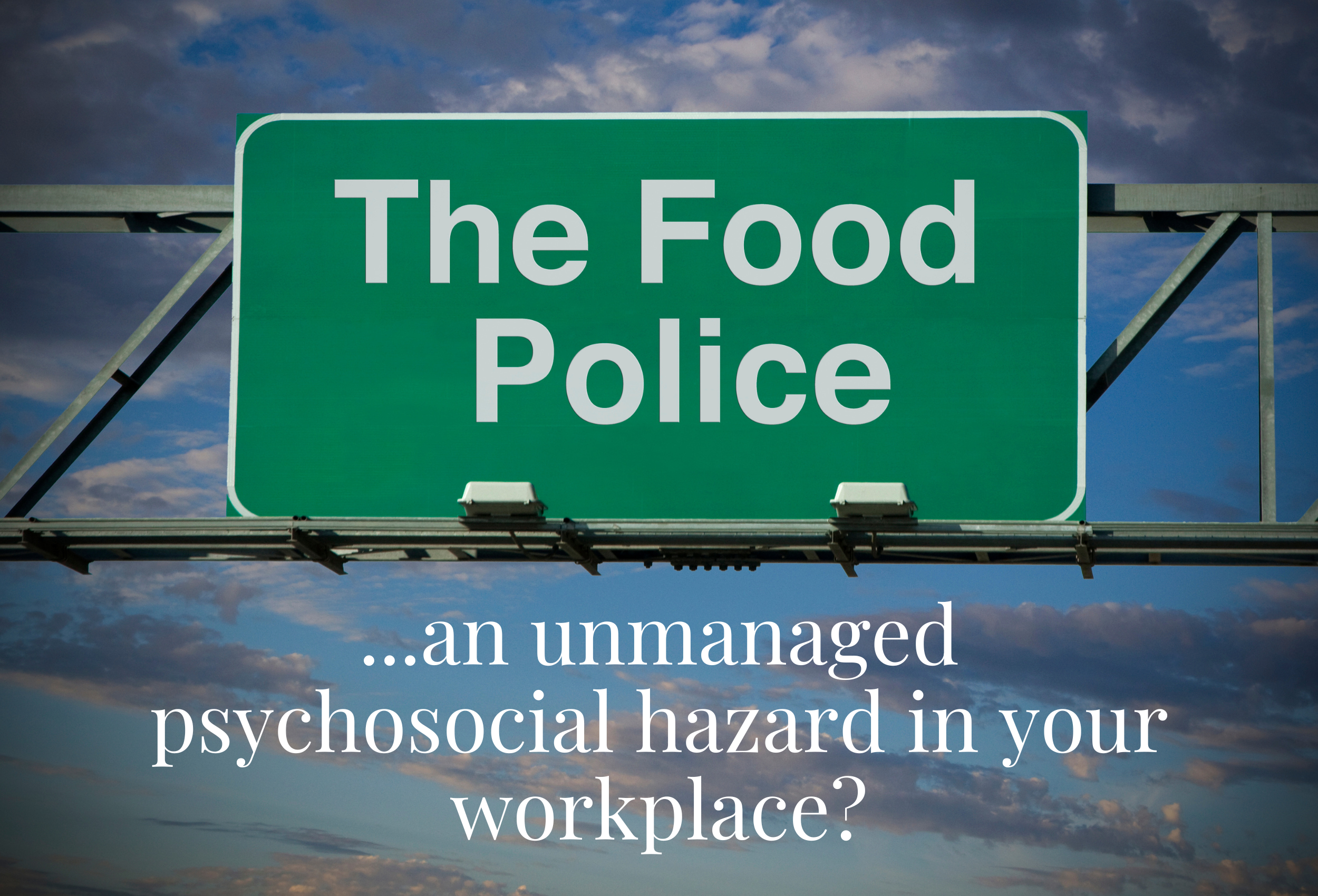
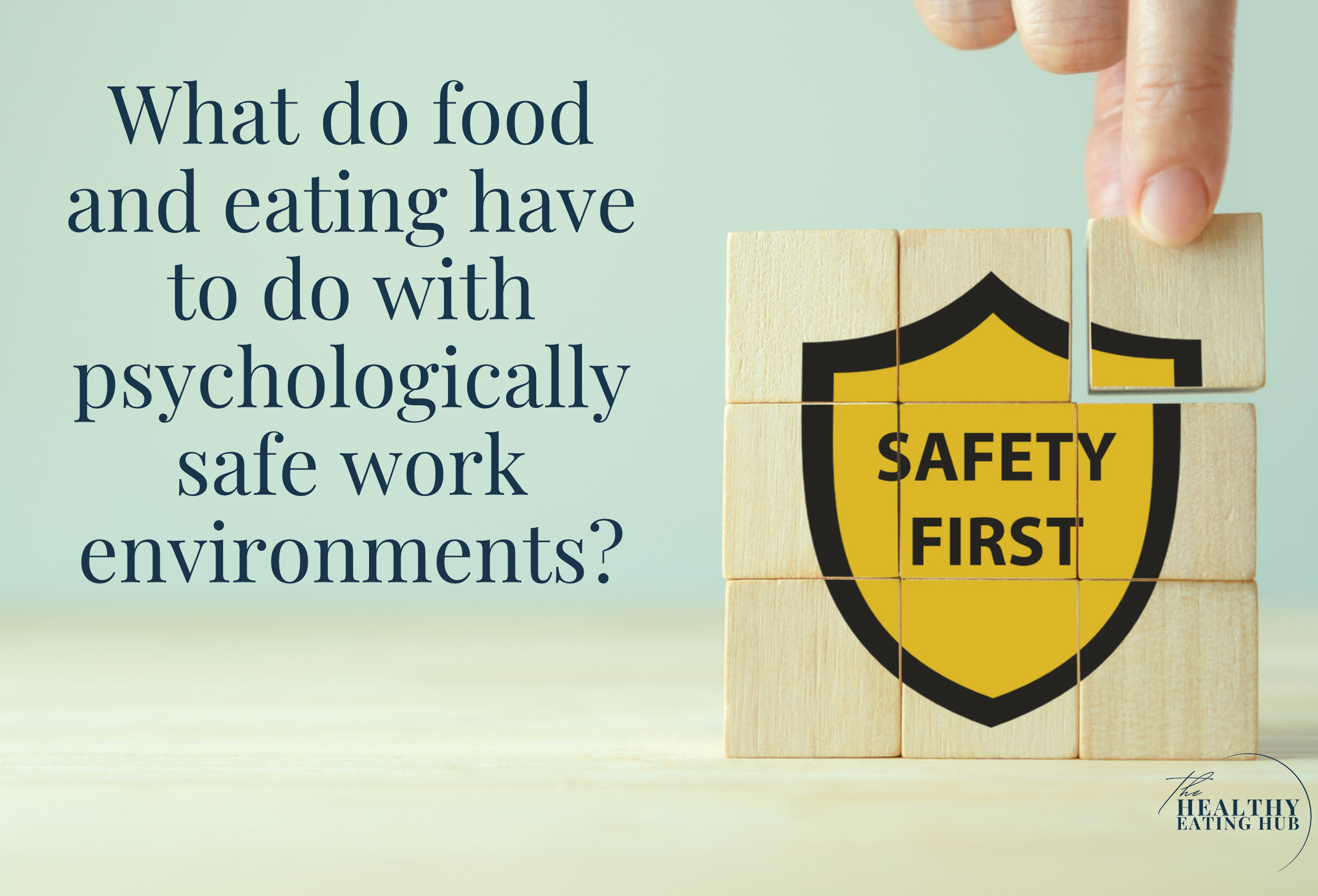
You may have heard that Australian workplaces now have an obligation to ensure the psychosocial safety of their staff members. This involves identifying psychosocial hazards – that is, anything that could cause psychological harm – and minimising the risk of these hazards.
Psychosocial hazards come in many forms, including poor support, lack of role clarity, and job demands, to name a few.
According to the Mental Health Commission’s Blueprint for Mentally Healthy Workplaces,
“To function at their best, people need safe and healthy environments, cultures and practices”.
What does this have to do with food and eating?
Quite a bit, actually! When it comes to having a safe work environment, having adequate opportunities to eat and drink, keep blood sugar levels stable and feel free of stigma and discrimination is very important.
Broadly, if the workplace doesn’t provide adequate opportunities to eat and drink, it is not minimising psychosocial hazards. It is also opening itself up to physical risks, as regular eating, especially in demanding jobs, is required to keep blood sugar levels stable. Without this stability workers are at risk of lapses in concentration, which could have dire consequences depending on their job (imagine someone working at heights, for example).
Specifically, food and nutrition related psychosocial risk hazards could be assessed by asking:
- Are staff members able to take adequate breaks?
- Do staff members have enough time in their breaks to eat sufficient food?
- Will taking a break to eat or hydrate cause more stress due to work demands and workplace culture?
- Does the work environment allow for adequate hydration – is clean water is available and accessible, are there opportunities to drink water and use the toilet at any time?
- Does the workplace culture help or hinder people to eat?
- Is there stigmatising messaging – visual or verbal, overt or covert – around the workplace regarding food choice or bodies?
- Is there a food safe environment for staff to prepare and/or eat food?
- Is there an inclusive or judgmental workplace culture surrounding food and eating?
- Do staff members feel supported to take care of their health, both physical and mental?
What can I do about it?
In the first instance, include the questions above in your workplace risk assessment. The goal is to minimise as many of these risks as possible. This might mean:
- Making sure adequate breaks can be taken for eating by all staff members
- Encouraging managers to lead by example (more on that here)
- Making sure clean water and toilets are accessible to all staff
- Discouraging “diet talk” in the workplace
- Providing somewhere for staff to safely prepare, store and/or eat food
- Providing an Employee Nutrition Program
- Running seminars on healthy eating that take a health-first, non-diet approach (you can read more here or get in touch to discuss The Hub running one of these at your workplace)
Bottom line?
Including food and nutrition considerations in your hazard reduction program is a great way to improve the psychosocial safety of your workplace.
Not sure how your workplace shapes up? Our Workplace Wellbeing Method determines your corporate health status by offering a turn-key method to assess the environmental, cultural, and individual factors of your company which affect health.